

The house · How it’s made
Component by component.
€45 buys one copy of a printed edition of 100. Here is where every part of it comes from, in the order it is made — cloth first, box last.
- CLOTH
- 240 gsm combed cotton, two-ply
- Made in Portugal
- CUT & SEWN
- Boxy relaxed, side-seamed
- Made in Portugal
- High-density water-based screen, 1 ink
- Made in Spain
- LABELS
- Tagless, heat-transferred, numbered ___/100
- Made in Spain
- PACKAGING
- Uncoated board sleeve, no plastic
- Made in Spain
 Composite · not the physical sample
The cloth & the make
The fit is the part that never gives ground.
Margin is earned in the ink, the box and the way we work — never in the pattern and never in the hand of the cloth. These are the numbers each lot is measured against before it is packed.
- Weight
- 240 g/m², two-ply combed ring-spun cotton — ≥228 g/m² verified on the finished garment, three weighed per lot
- Shrinkage
- Sanforized, ≤3% in length and width (AATCC 135), compensated in the pattern before cutting
- Torsion
- Open-width, side-seamed construction — ≤5% twist after washing
- Collar
- 2×2 rib, sub-dimensioned, 5% elastane in the rib only, so it returns instead of waving
- Shoulders
- Shoulder-to-shoulder taping and coverstitch — gap ≤3 mm after 30 pulls
- Hems
- Double-needle, 10–12 stitches per inch
- Label
- Tagless: printed inside the collar. Nothing to cut, nothing to scratch
- Hand
- Bio-wash and silicone finish, approved by touch on a washed sample — never on a dry one
- Cut
- Boxy relaxed with controlled length — the fit is the one part of the garment that never gives ground
Short runs allow what long runs cannot: three garments per lot are weighed, measured, washed three times at 40°C and handled again before a single copy ships.
The placement law
Nobody in this trade publishes their tolerances.
“Off-centre” stops being an opinion the moment there is an origin, an axis and four numbers. Everything is measured on the garment — never on the edge of a photograph.
- Origin N
- The centre-front neck point, where the collar rib meets the body.
- Axis A
- N down to the mid-point of the hem. Not the middle of the silhouette — relaxed sleeves lie about that by 1–3 cm.
- Rotation
- Measured against the shoulder seam line, never against the frame of the image.
The plate, on its axis · drop 001
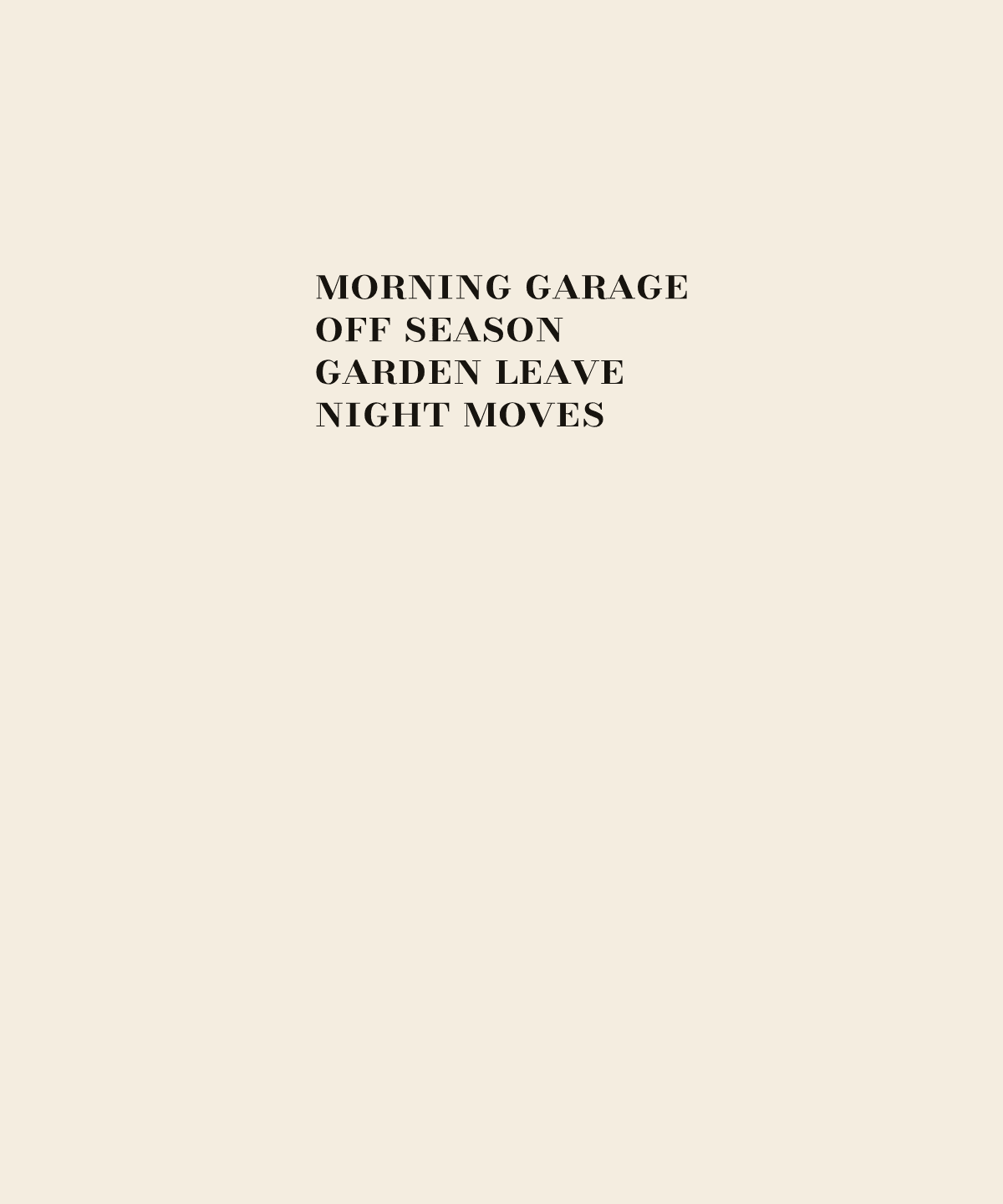 N · centre-front neckTop edge · 5.5 cm below NAxis A · N to hem
R2 · Index · 24.0 cm wide · x = 0 on A · front panel · one ink
Drawn in vector, centred on its ink box — never on the outline of the shirt — and measured by script before it ever touches cloth. Off-centre is impossible by design, not by discipline.
The seven registers · sizes S–XL
 R1 · HorizonChest wordmarkFrontw19.0 cmx0y7.519.007.5
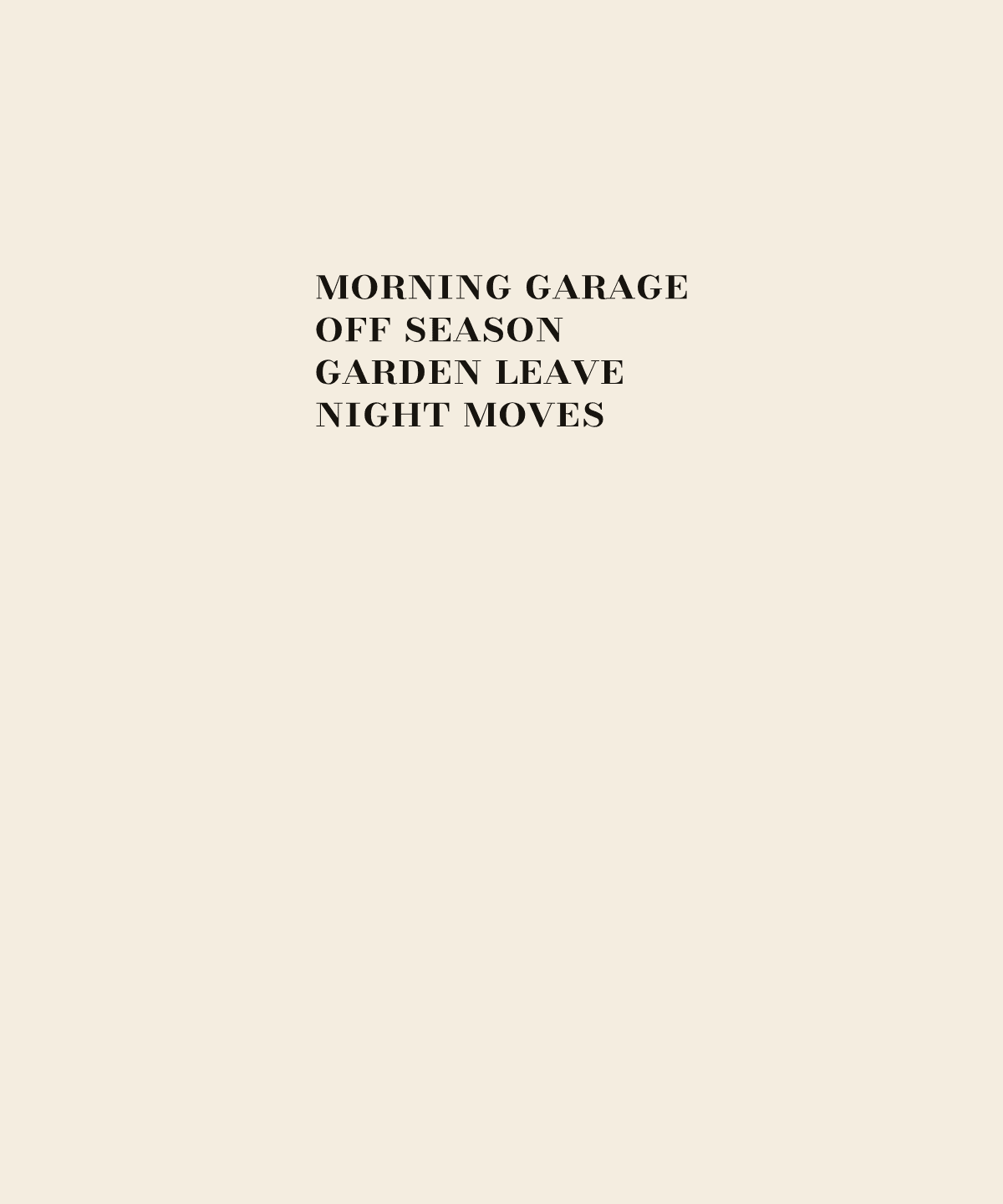 R2 · IndexStacked listFrontw24.0 cmx0y5.524.005.5
- In reworkR3 · StampSouvenir blockFrontw20.0 cmx0y9.020.009.0
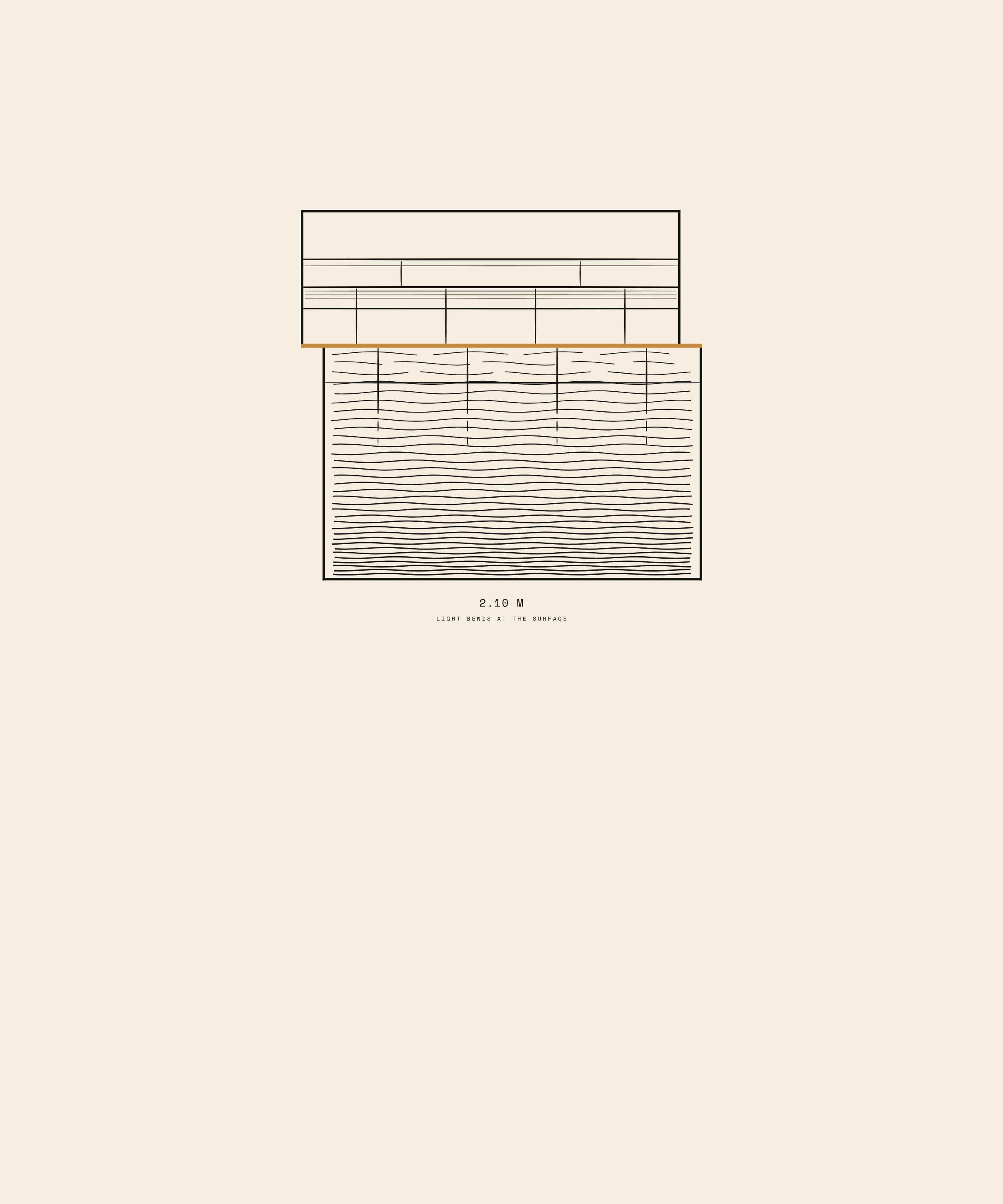 R4 · PlateEngraved plateBackw26.0 cmx0y7.026.007.0
 R5 · AtomEmbroidered signatureFrontw6.5 cmx−9.0y8.56.5−9.08.5
 R6 · ColophonThe declared rule, microFrontw8.0 cmx+7.0y4.0 above hem8.0+7.04.0 above hem
 R7 · NapeMicro-arc at the neckBackw9.0 cmx0y2.5 all sizes9.002.5 all sizes
Width is identical in every size — the piece has to read the same on S and on XL. Only the vertical grades, by 0.5 cm per size step. R7 never moves. R3’s plate is being redrawn, and the row stays published while it is.
The envelope · checked on size S
- Max ink box
- 30 × 40 cm
- Ink to side seam
- ≥ 8.0 cm
- Ink to hem
- ≥ 4.0 cm
- Ink to shoulder
- ≥ 6.0 cm
If it fails on S, the design fails. We never shrink the artwork to rescue a size.
Tolerances · outside these, the copy is rejected
- Optical centre off axis A
- Flat≤ 2.0 mmWorn≤ 0.4% of chest width
- Top edge off its datum
- Flat≤ 3.0 mmWorn≤ 0.8% of chest width
- Rotation vs shoulder line
- Flat≤ 0.3°Worn≤ 1.0°
- Scale vs declared width
- Flat± 1.5%Worn± 3.0%
Every approved image carries its three figures written down: axis deviation, top edge, printed width.

This piece · The List
- Register
- R2 · INDEX
- Printed width
- 24.0 cm
- Panel
- front
- Inks
- 1
Ranged left by declaration, not by accident: the left flank sits on the axis, so the block reads a touch heavy on the left. That is written into the spec.
Composite · not the physical sampleThe ink, the label, the box
Clean and dense. Never aged.
The print sits on the cloth, not in it, and it is finished the day it is made — no cracking, no fake wear. What arrives is the last third of the object, and it is made with the same care as the first.
- High-density water-based screen, one ink, warm black on cream — clean, dense, and it will not crack
- Technique
- Flat type, line engraving, stamp or embroidery. A photograph is never printed on cloth here
- Inside label
- Tagless, heat-transferred: size, composition and the copy number ___/100
- Box
- Uncoated board sleeve, tissue, the atom stamped in ink — and no plastic anywhere
- Edition card
- The declared rule printed on card, inside every copy: the promise travels with the garment
What we don’t do
Five things, on the record.
A house is defined by what it refuses, and refusals are cheap until they are published. Here are ours.
- Print-on-demand. Every copy is made in one run, from one lot of cloth.
- A photograph printed on cloth. Flat type, line engraving, stamp or embroidery — nothing else.
- Distressed graphics: no cracking, no dirty halftone, no collegiate arc.
- Restocks. A closed edition stays closed.
- Discount codes, welcome offers, seasonal sales. The price on day one is the price on the last day.